MEG Lab
Department of Experimental Medical Science, Lund University - SciLifeLab - TCSMT, University of Turku
The Microbial Evolutionary Genetics (MEG) Lab develops predictive, quantitative understanding of how microbial populations and communities evolve, with a particular focus on antimicrobial resistance, community resilience, and infection dynamics. We investigate when resistance evolution and treatment outcomes are predictable, and when they depend critically on ecological interactions among coexisting microbes.
Our research integrates experimental evolution, synthetic and clinically inspired microbial communities, genetic engineering, genomics, and bioinformatics. By combining ecological realism with experimental control and data-driven modelling, we aim to generate evolution-aware principles that inform antimicrobial therapy and improve understanding of persistent and treatment-resistant infections.
The lab is led by Assistant Professor (DDLS Fellow) Johannes Cairns and operates between Lund University and the University of Turku, in close collaboration with interdisciplinary infection research and data-driven life science environments in Sweden and Finland.
news
| May 30, 2026 | New ISME Communications study out: we found that total carbon availability, rather than resource complexity, is the primary factor shaping community state shifts in a synthetic microbial community. |
|---|---|
| May 28, 2026 | New PNAS study out: we used a long-term synthetic microbial community experiment to show that evolution can drive major shifts in microbial community structure over time. |
| May 19, 2026 | Leo is joining us for a research group internship to setup a polymicrobial urinary tract infection model system. Johannes is attending the DDLS Fellows Retreat in Epidemiology and Infection Biology in Norrköping on 19-20 May and presenting a flash talk in the PALS Conference 2026 held 20-22 May in Kolmården. A new pre-print is also out on how eco-evolutionary dynamics and antibiotic detoxification interactively determine community antibiotic response. |
| Apr 07, 2026 | Johannes is speaking at the Infect@LU Day on 7 April in Lund and at the SFM Days on 14 April in Gothenburg. |
| Mar 04, 2026 | New: Preprint on ecological tristability in synthetic microbial communities on bioRxiv; and a paper on bacterial clade dynamics under predation accepted in Evolution (preprint). |
selected publications
2026
-
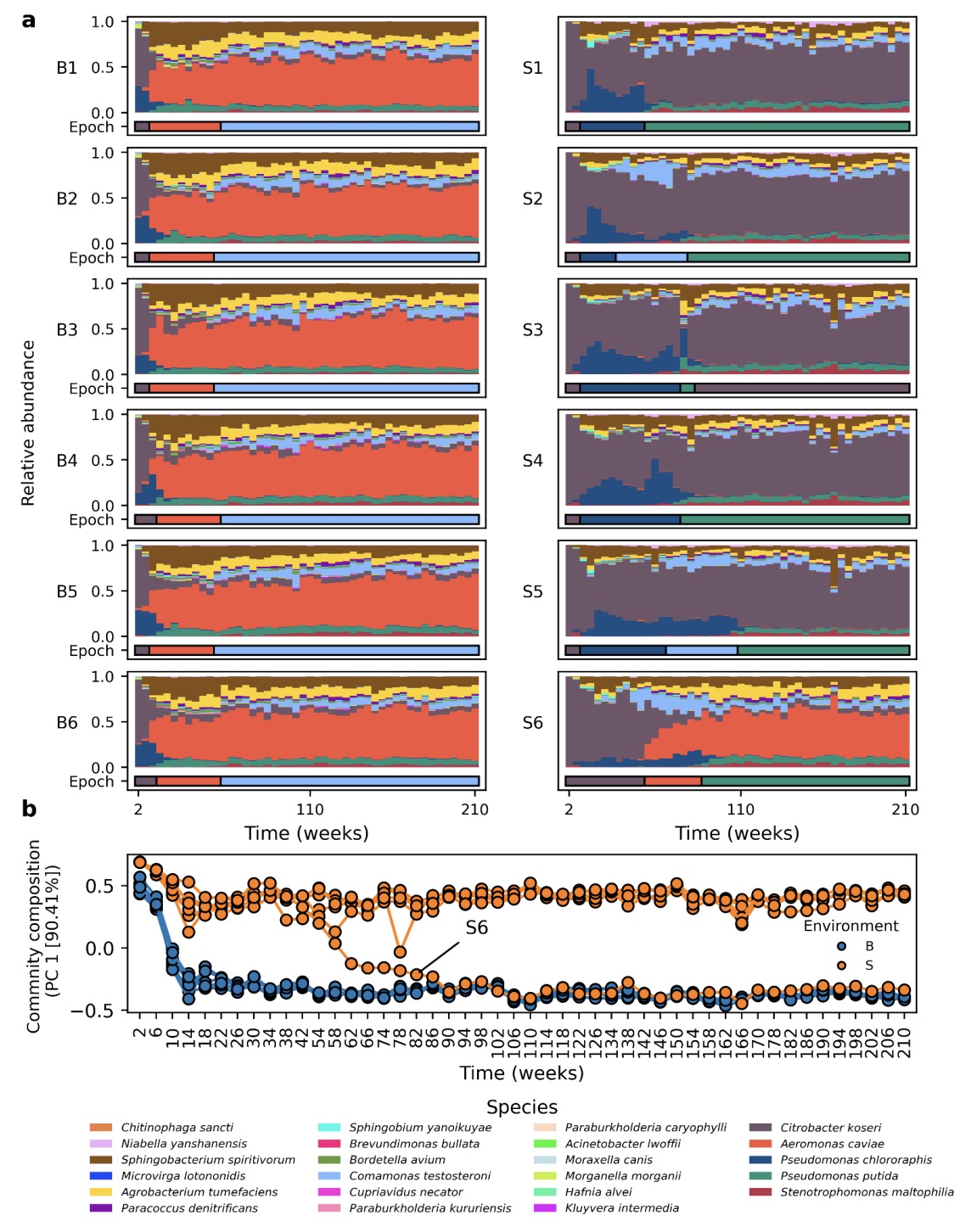 Evolution induced state shifts in a long-term microbial community experimentProceedings of the National Academy of Sciences, 2026
2025
-
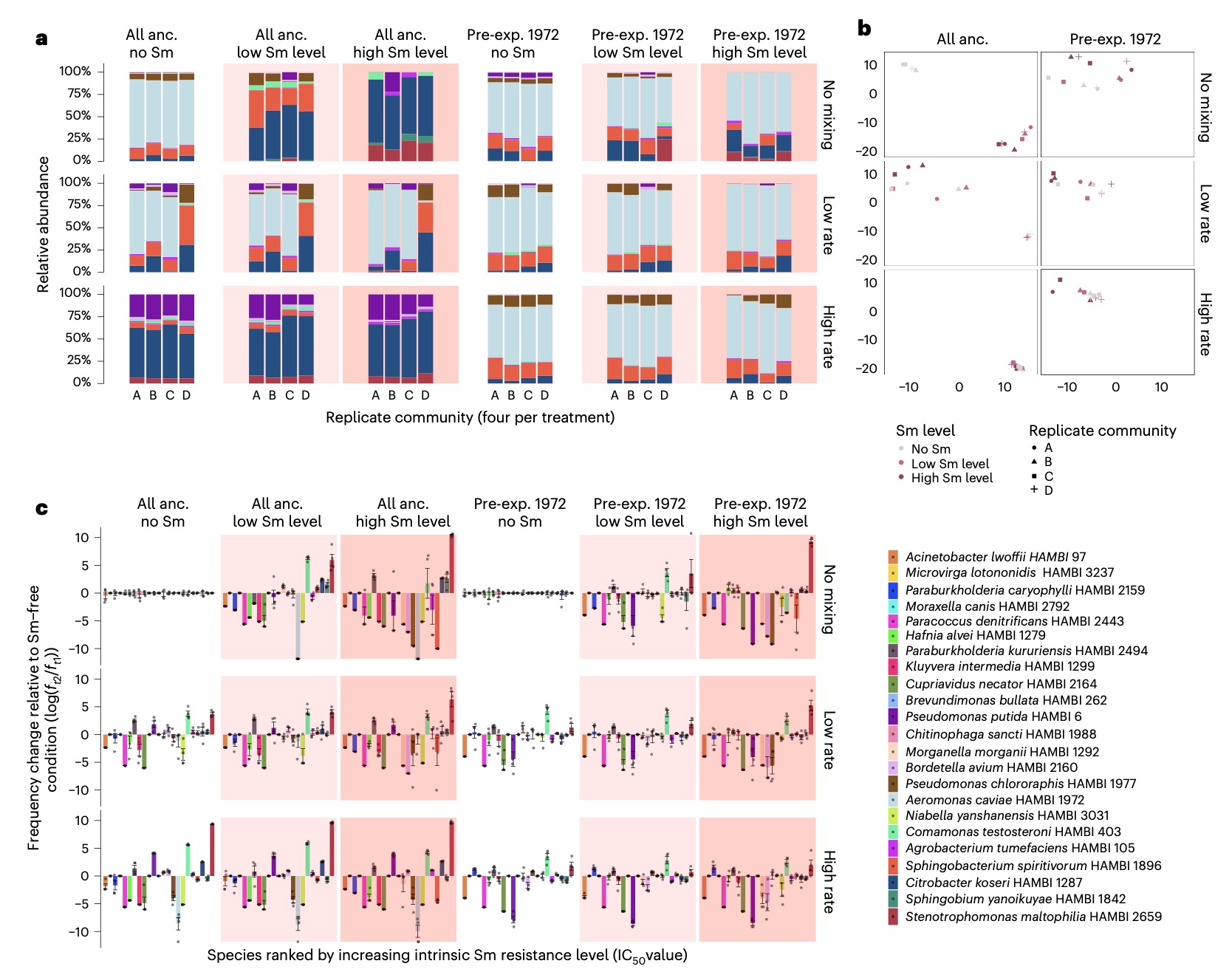 Pre-exposure of abundant species to disturbance improves resilience in microbial metacommunitiesNature Ecology & Evolution, 2025
2022
-
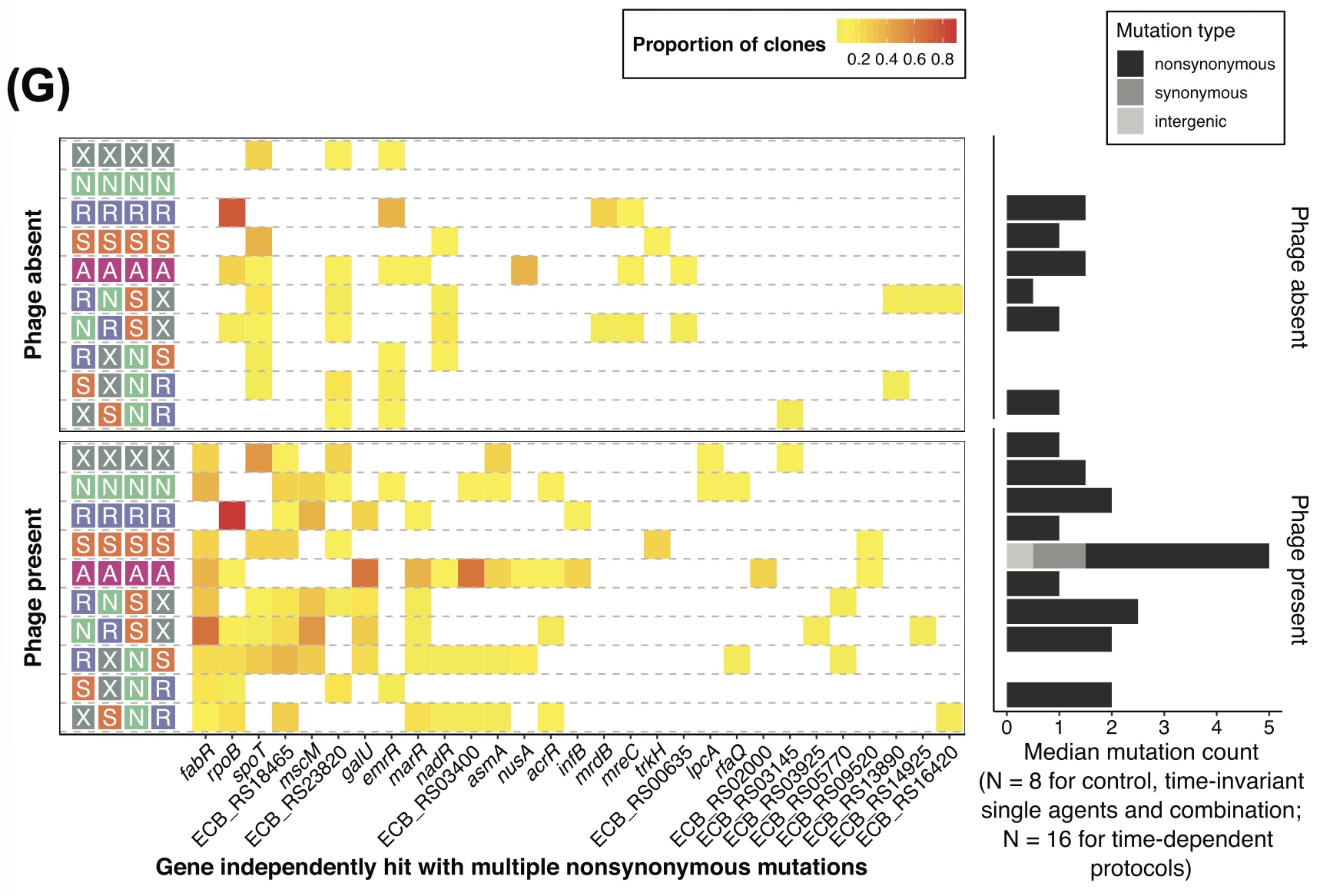 Strong selective environments determine evolutionary outcome in time-dependent fitness seascapesEvolution Letters, 2022
2020
-
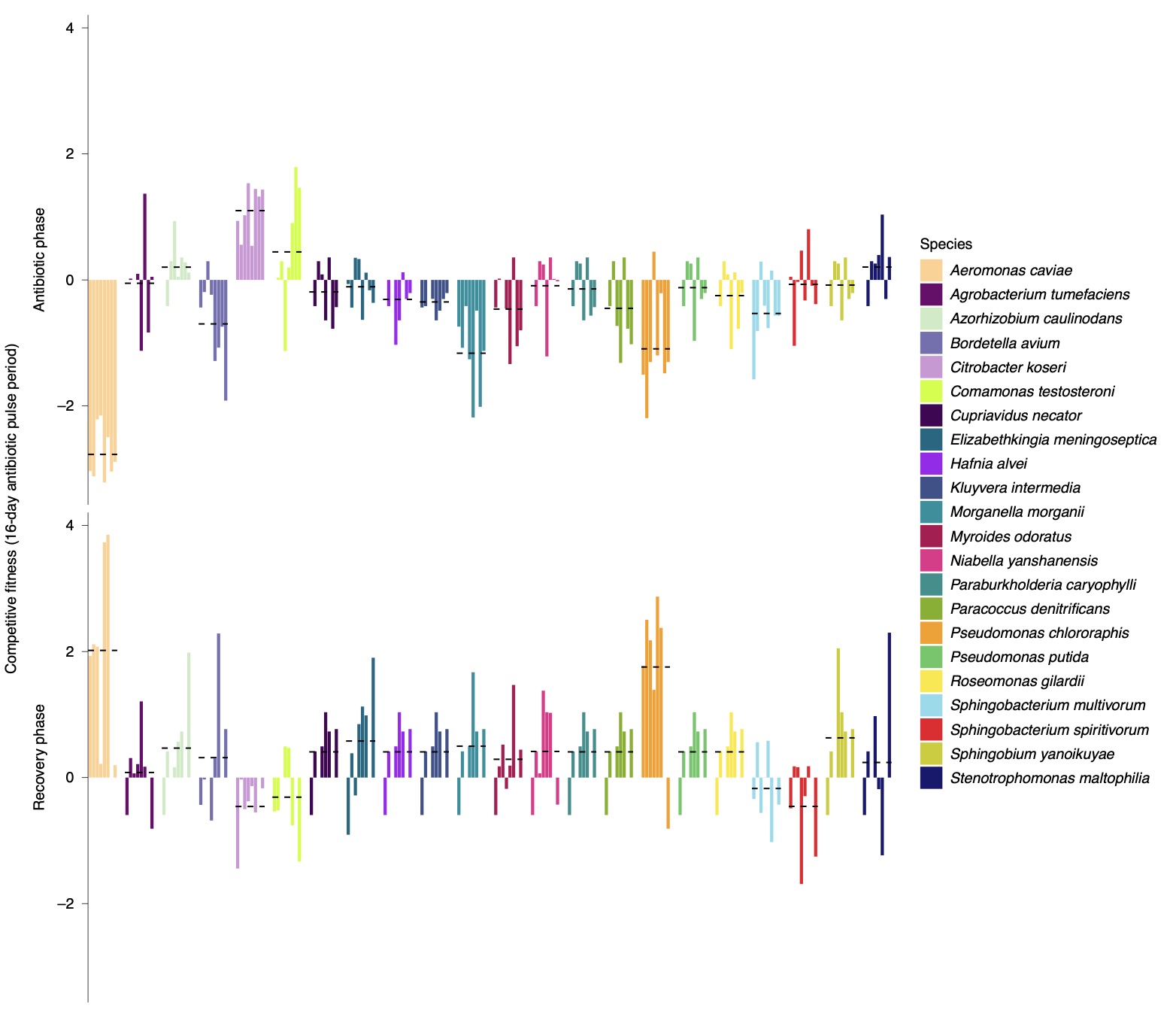 Repeatable ecological dynamics govern the response of experimental communities to antibiotic pulse perturbationNature Ecology & Evolution, 2020
2018
-
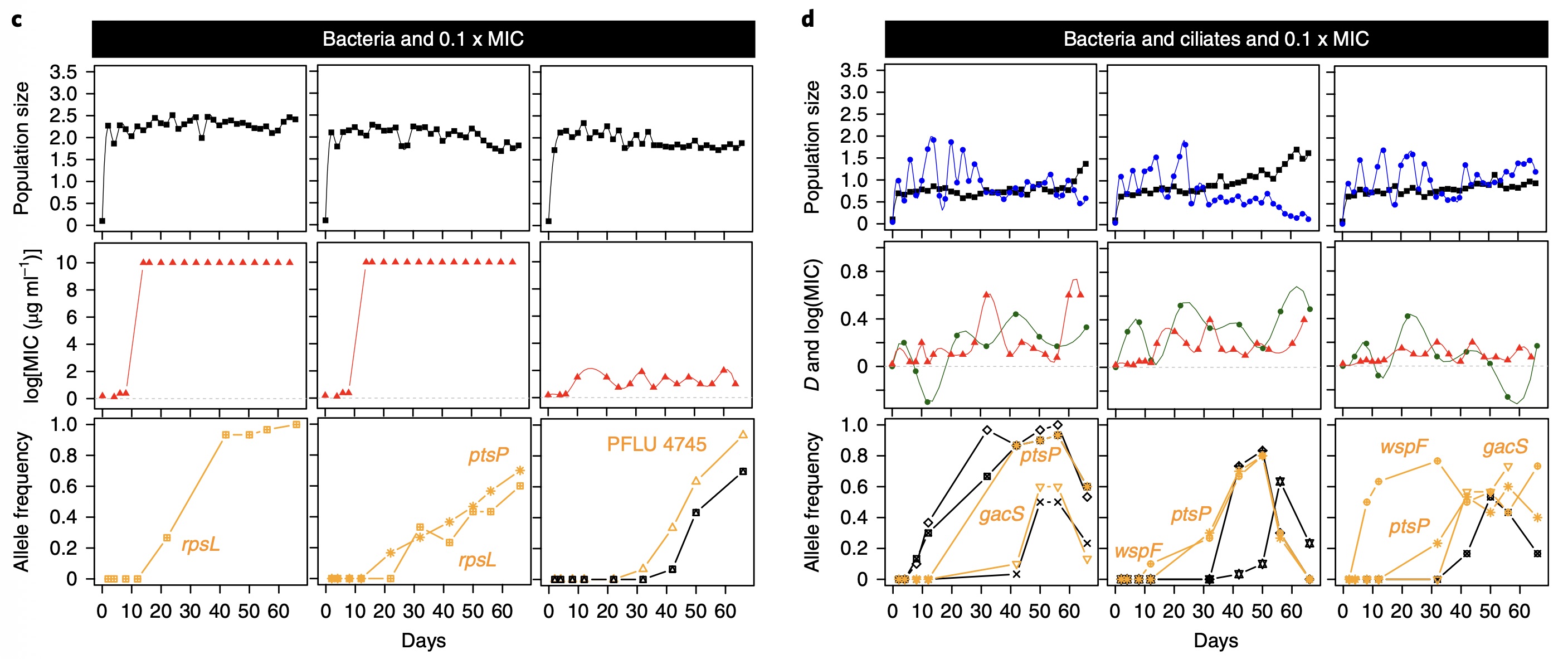 Dual-stressor selection alters eco-evolutionary dynamics in experimental communitiesNature Ecology & Evolution, 2018
2017
-
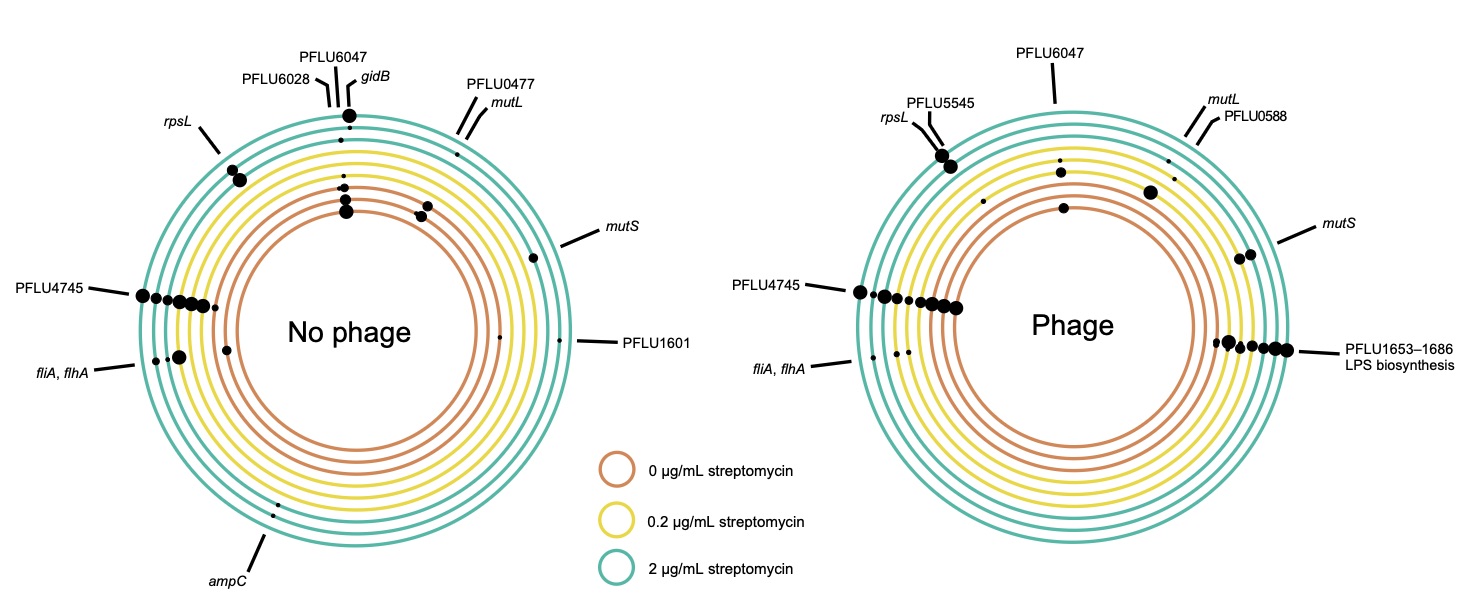 Genomic evolution of bacterial populations under coselection by antibiotics and phageMolecular Ecology, 2017